

Hollis, my neighbor two doors down, stood at my patio rail a few weeks back and asked me something pretty direct. He'd seen the black half moon insert locked into one side of my kettle and wanted to know if that Weber Gourmet BBQ System sear grate was actually worth swapping in over the plain chrome wire grate his own kettle came with, or if it was just another accessory that looks good and does little extra. I've now run a full year on that Weber sear grate, porcelain enameled cast iron sitting on half of my 22.5 inch kettle, with the other half still running the original stock grate that came in the box the day I bought the grill. So I can give Hollis, and you, a real comparison instead of a guess.
The short answer is that neither grate replaces the other completely, at least not on my setup. The Weber sear grate wins hands down on heat retention, sear mark depth, and how well it works with a two zone fire. The stock cooking grate wins on weight, full surface coverage, upfront cost, and how little you have to think about it once the cook is over. I still run both halves side by side on the same kettle instead of going all in on solid cast iron, and after twelve months of steak nights, Sunday burgers for the grandkids, and more than a few humid Gulf Coast evenings, I think that split setup is exactly right. Here's the row by row breakdown I'd walk Hollis through if he asked me again over coffee on the patio.
How I Tested Both Grates Side by Side
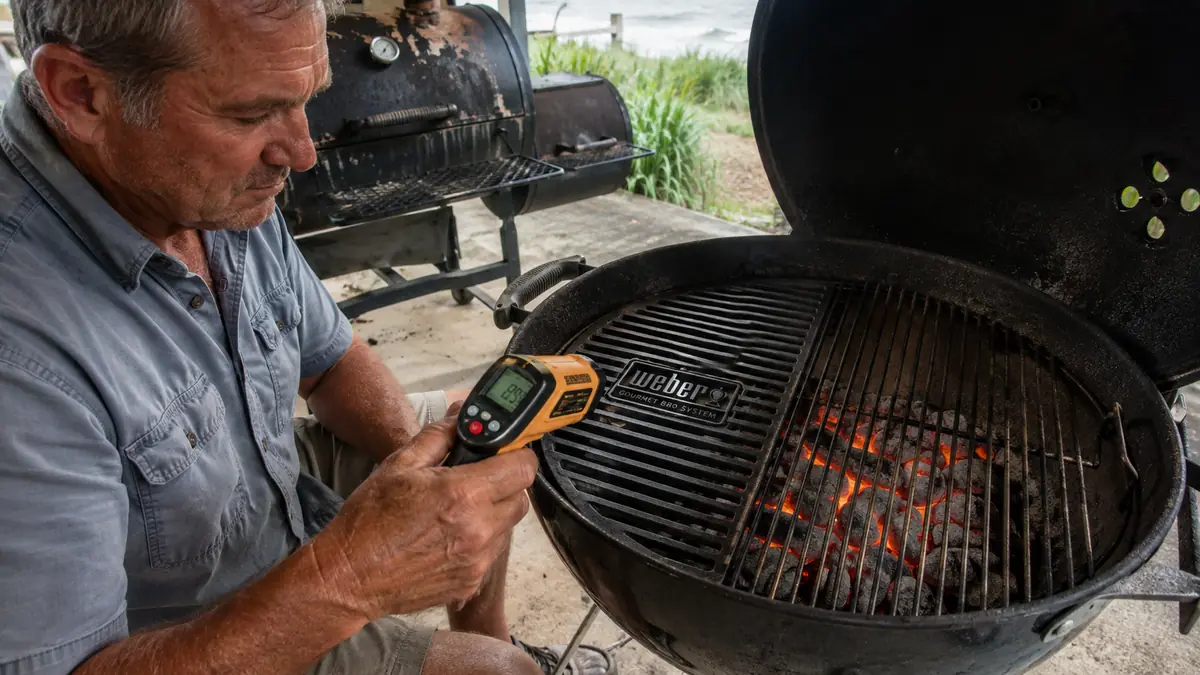
I didn't just eyeball this. Back in June, on a still evening without much wind off the bay for once, I lit a full chimney of charcoal and split it evenly under both halves of the kettle. I laid two cold ribeyes from the same package on the Weber sear grate and two more on the stock grate at the same moment, then checked surface temperature with an infrared thermometer before the meat went down and again after each flip. I ran the same test again a week later with burgers straight off the fridge shelf, because that's the cook that actually happens most Sundays when Kara, Beto, and the grandkids come through.
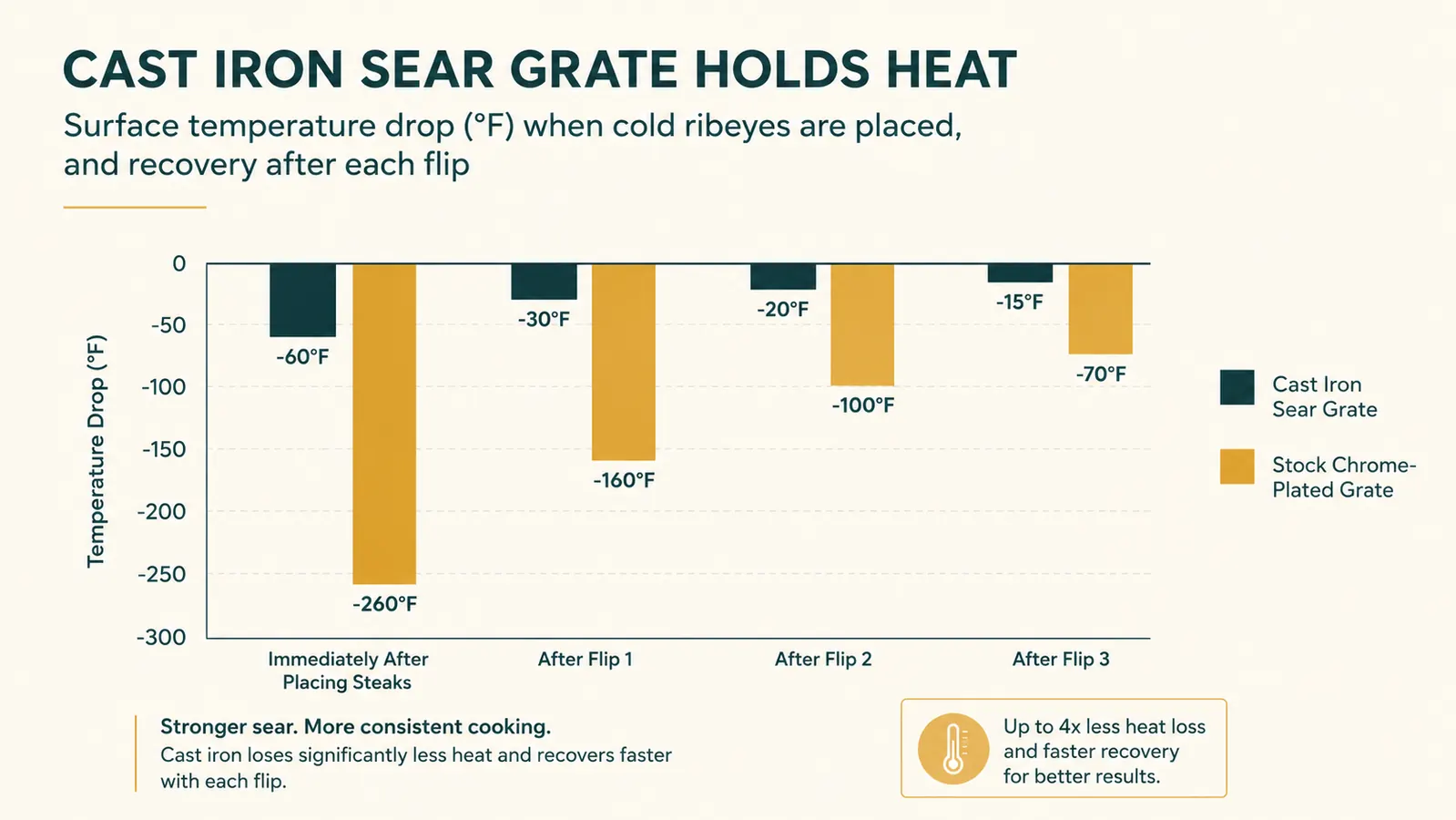
The numbers matched what my eyes had already been telling me all year. The Weber sear grate held within about fifteen degrees of its starting surface temperature through three straight flips. The stock grate dropped more than sixty degrees the moment the first cold ribeye touched it and never fully recovered before I pulled the meat off. That gap is the whole reason cast iron exists as a grilling accessory, and it's also exactly why the stock grate still earns its keep on burger night, when I need more room and don't need the deepest crust in the world on eight patties at once for a hungry crowd.
| Weber Sear Grate | Stock Grate | |
|---|---|---|
| Cooking Surface Coverage | Half of a 22.5 inch kettle grate | Full 22.5 inch kettle grate |
| Weight | About 8 pounds for the half moon insert alone | A couple pounds of thin wire for the whole grate |
| Cost to Add | Bought separately as an aftermarket accessory | Included with the kettle, no extra purchase |
| Sear Mark Depth | Deep, dark crosshatch that holds its shape | Faint, shallow lines that fade fast |
| Heat Retention on Cold Meat | Surface temp barely dips through multiple flips | Temp drops hard the moment cold meat lands |
| Maintenance After Each Cook | Oil wipe-down and full drying, every single time | A quick brush or rinse, no oiling needed |
| Rust Risk in Salt Air | A porcelain chip exposes bare iron that rusts fast | Surface rust wipes off with a brush, no coating to fail |
Where the Weber Sear Grate Wins
Sear mark depth is the most obvious difference and the reason I bought this thing in the first place. The ridges on the Weber sear grate are taller and hold real contact pressure against the meat, so a ribeye comes off with a dark, defined crosshatch instead of the faint gray lines I used to get off the stock grate no matter how hot I ran the coals or how long I let the fire build. Tessa has started asking to watch me rotate the steaks to get the diamond pattern just right, which tells you something about how visible the difference actually is, even to an eight year old who mostly cares about ketchup.
The other place it wins is heat retention on a two zone fire, which matters more than people expect. I run the Slow 'N Sear basket on the charcoal side under the sear grate for reverse sear Sundays, cooking low and slow for close to an hour before sliding the meat over for two or three minutes a side of real heat. The Weber sear grate holds that heat through the whole finishing window instead of bleeding it out the second cold meat lands, which is the exact method I walk through step by step in my guide to getting steakhouse sear marks with cast iron. The stock grate simply can't hold a candle to it for that specific job, no matter how much charcoal you pile on.
Where the Stock Grate Wins
Coverage and weight are where the stock grate pulls ahead, and they matter more than I expected before I owned both. The Weber sear grate only covers half of the 22.5 inch kettle, so on a Sunday when Kara, Beto, and the grandkids come through and I'm running eight or nine burgers at once, I need the full stock grate in place for the rest of the cooking surface. The stock grate is also a lot lighter to lift out when I'm cleaning the kettle or knocking ash loose, where the cast iron half moon takes real effort to hoist out and set aside without banging it against anything, especially with a plate of steaks waiting in the other hand.
Maintenance and rust risk are the honest reason some people should just stick with what came in the box. The stock grate needs nothing more than a quick brush or a rinse after a cook. The Weber sear grate needs an oil wipe down and a full drying every single time, because Gulf Coast humidity will find any bare metal fast, and a porcelain chip exposes iron that can start rusting within a couple of humid weeks if you're not staying on top of it. I go into the full maintenance routine, including the chip I picked up on a bumpy ride to Hollis's place, in my honest review of this grate. If you already dread extra upkeep on your gear, that's worth weighing seriously before you buy one.
A Rust Story That Proved the Point
I want to be specific about the salt air problem instead of just waving at it, because that's the detail that actually changes a buying decision. Last summer I hauled the Weber sear grate over to Hollis's place for a cookout, tucked in the same plastic tote I keep the Slow 'N Sear and my chimney starter in, and it knocked against the chimney on a bumpy stretch of road near Ocean Drive. That knock chipped one corner of the porcelain down to bare iron. I didn't catch it until the next cook, and by then a faint orange ring had already started forming right on that chip. The stock grate has never once given me that kind of scare in all the years I've owned it, because there's no glass coating on it to fail in the first place, just plain steel wire that either rusts evenly and slowly or doesn't rust much at all out here on the coast.

Why I Run Both Instead of Choosing One
The mistake I almost made last April was thinking about this as a straight swap, cast iron replacing chrome wire entirely across the whole kettle. Once I actually looked hard at what a full solid cast iron grate would mean, I realized I didn't want that much weight to lift in and out every cook, and I definitely didn't want that much porcelain to babysit near the bay. The half moon size of the Weber sear grate turned out to be the smarter move, because it lets me keep a dedicated hot zone for the meals where sear marks actually matter and leave the rest of the kettle running the low maintenance grate it came with, no extra thinking required.
That split setup is also just more honest about how my week actually goes. Steak night with Marisol is maybe twice a week, and it deserves the cast iron. Sunday cookouts for the whole family are about volume and speed, and the stock grate handles that side just fine without me babying it between flips. Owning both pieces instead of picking a winner has been the right call for a full year now, and I don't see that changing anytime soon.
Tired of Faint Sear Marks No Matter How Hot You Run Your Coals?
The Weber Gourmet BBQ System sear grate replaces half your stock grate with porcelain enameled cast iron built to hold real searing heat through every flip. See today's price and current availability on Amazon.
Amazon Check Today's Price on Amazon →Who Should Buy Which
If steak or burger night is a regular fixture at your house the way it is at mine, and you've been disappointed by pale marks despite a hot fire, the Weber sear grate earns the extra upkeep. It's especially worth it if you already run a two zone setup, because that's exactly the job it was built for, finishing what a low and slow cook starts over an hour or more. I cover the full year of ownership, including what surprised me most, in my long term review of this grate.
If you mostly smoke low and slow and rarely run a hard direct sear, or if you live somewhere dry where rust has never been a real worry, the stock grate alone will probably serve you fine, and that's not a knock on the cast iron, it just means the extra care isn't buying you much in your climate. And if you're feeding a big crowd more often than you're chasing a steakhouse crust on two ribeyes, the full coverage of the stock grate matters more day to day than the deeper marks the cast iron half gives you on a smaller portion of the grill. Out here on the coast, I still think the split setup wins overall, but that's a decision worth making around your own cooking rhythm, not mine.
Ready to See What Real Sear Marks Look Like on Your Kettle?
A year of side by side testing says the Weber sear grate is worth the extra care if searing matters to you. Check today's price on Amazon and see if it fits your grill.
Amazon Check Today's Price on Amazon →