
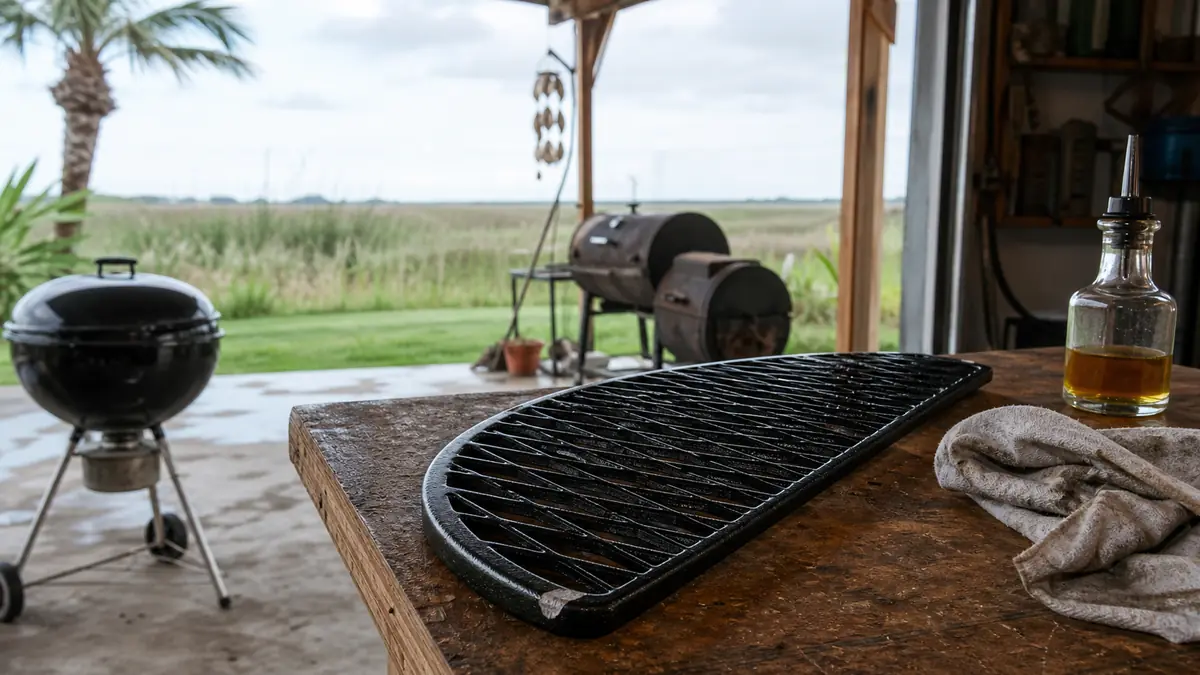
Nobody tells you, when you're standing in the aisle or scrolling the listing for the Weber Gourmet BBQ System sear grate, that half of owning this thing is learning what not to do with it. I made almost every mistake there is in my first six weeks with mine, and I've had it locked into one half of my 22.5-inch kettle for about a year now. The long version of how I use it week to week, I've already written up elsewhere. This is the other side of it, the stuff that isn't on the product page, isn't in the five-star reviews, and isn't something a store clerk is going to walk you through before you check out.
The short version is that a porcelain-enameled cast iron insert behaves nothing like the stock chrome wire grate it partly replaces, and Weber's own packaging doesn't spend much time on that difference. It just tells you it fits Weber's Gourmet BBQ System kettles and gives you a couple lines about searing performance. What it doesn't tell you is that the wrong grill brush can scratch it in one pass, that not every 22.5-inch kettle can actually accept it, and that there's a real learning curve between unboxing it and treating it the way it wants to be treated. I found all of that out the hard way, one cookout at a time, and I still catch myself second-guessing a habit I picked up years ago on the old grate.
The Quick Verdict
Once you know the fitment requirement and the right way to clean it, the Weber sear grate is a genuinely good piece of gear. Get either one wrong out of the gate and it feels like more trouble than a grate has any business being.
Amazon Check Today's Price →Before You Buy One, Know the Two Things That Trip Up First-Time Owners
The Weber Gourmet BBQ System sear grate rewards the right technique and punishes the wrong one. See today's price and current availability on Amazon, and read the fitment note below before you check out.
Amazon Check Today's Price on Amazon →What I Got Wrong Before I Got It Right
My first real mistake happened about two weeks in, on a Tuesday steak night that started fine and ended with me staring at a thin scratch line across the porcelain surface. Out of pure habit, I reached for the same stiff wire grill brush I'd used on my stock grate for years and scraped it down after the coals cooled. That brush had never given my old chrome wire grate a second thought. On porcelain enamel, it left a faint but visible line almost immediately. I spent that night reading everything I could find about whether I'd ruined the thing, and the answer, thankfully, was no, but it taught me that a wire brush has no business touching this grate. A soft grill brush, a bamboo scraper, or even a folded paper towel does the job without gouging the glass coating baked onto the iron.
The second mistake was mental, not physical. Because it's cast iron, my first instinct was to treat it like the cast iron skillet Marisol keeps on the stove, which means seasoning it, building up a baked-on oil layer the way you would with a bare iron pan. That's exactly wrong for this piece. The porcelain enamel is already the protective surface, and trying to season over it just leaves a gummy, uneven film that smokes and smells during the next cook instead of building any real nonstick benefit. The right amount of oil is a light wipe after cleaning, not a bake-on layer, and figuring that out cost me one smoky, frustrating cookout before I backed off.
The third one nearly cost me the grate outright. Early on, trying to speed up cooldown so I could get it wrapped and back in the tote, I set the still-warm grate down on a cold concrete slab straight off the kettle. Porcelain enamel doesn't love a fast temperature swing, and rapid changes like that are exactly what cause hairline cracks in enameled cast iron cookware generally, not just this grate. Nothing cracked that time, but it scared me enough that now I let it cool on the kettle itself, or on a folded towel, never straight onto cold concrete or a splash of hose water to hurry things along.

The Fitment Nobody Spells Out Clearly
Here's the part I only understood once my neighbor Hollis got involved. He'd seen how much better my ribeyes were looking and wanted to try the Weber sear grate on his own kettle for a cookout he was hosting. His kettle is a few years older than mine, a plain flat cooking grate with no hinge and no center cutout. The sear grate sat on top of his grate instead of dropping into it, wobbling and never seating flush, because his kettle doesn't have the hinged Gourmet BBQ System hub that newer Weber kettles are built around. The listing mentions it fits 22.5-inch Weber charcoal grills, which is true, but it undersells how specific that fitment really is. It's not every 22.5-inch Weber kettle. It's the ones built with that hinged center-hub cooking grate, the system Weber calls the GBS.
That distinction matters more than it sounds like on a spec sheet, because it's the single most common reason I've heard of people being disappointed with this grate right out of the box. It's not a quality problem with the piece itself. It's buying it for a kettle that was never built to accept it and finding that out only after opening the package. If you're not sure whether your kettle has the hinged hub in the middle of the stock cooking grate, check before you order, because that fifteen seconds of looking saves a return shipment and a dented expectation. Hollis ended up borrowing my old stock grate half instead that day, and his burgers turned out fine, but it was a plain reminder that this piece was built for a specific system, not for any kettle with the same diameter.
What the Photos Don't Show You About the Cleanup
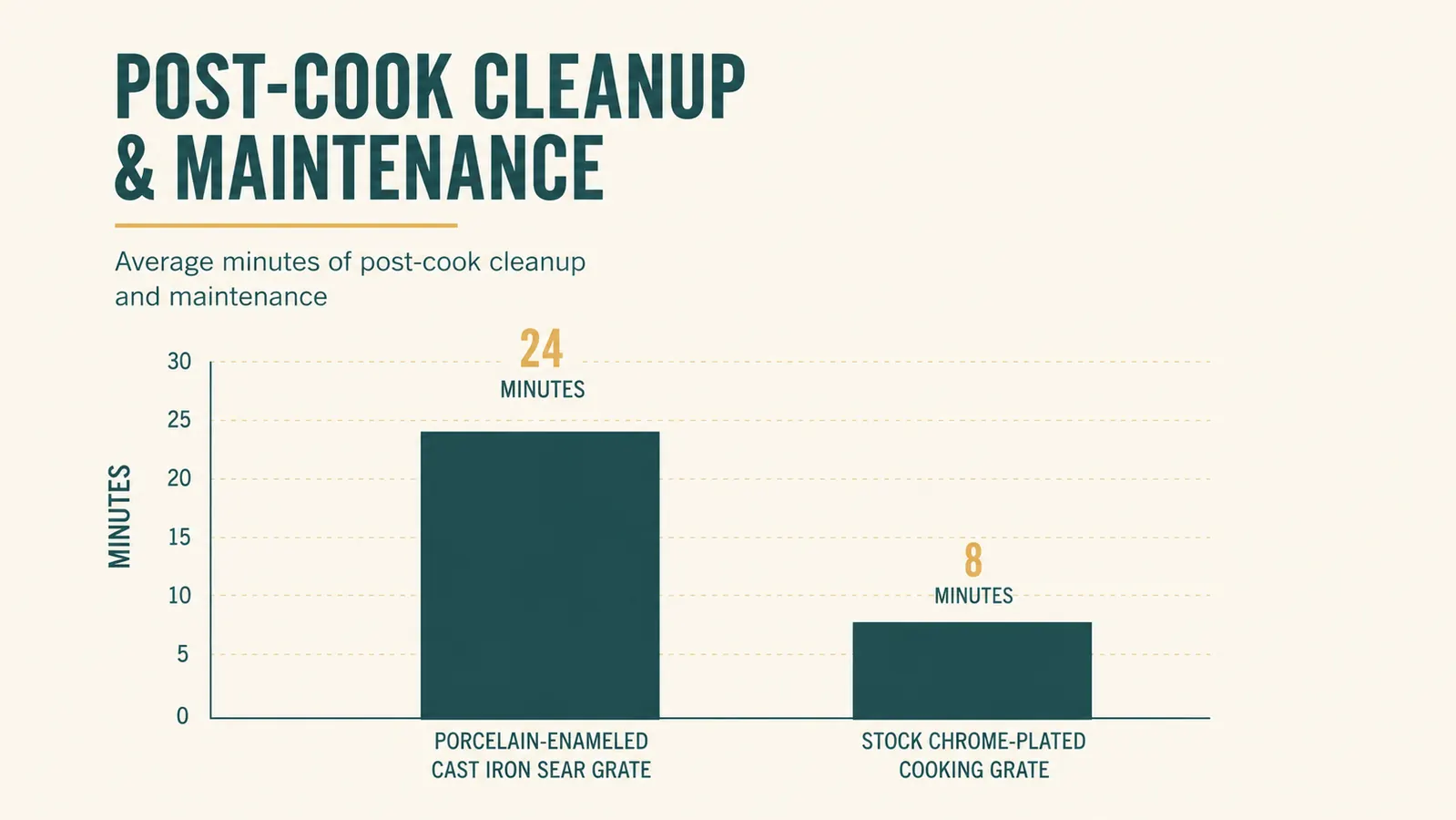
Every listing photo shows this grate holding a perfect crosshatched steak, which is the fun part. None of them show what the ridges look like after a Sunday burger crowd has come through, when rendered fat has settled into every valley between the raised lines. That's the part of ownership nobody photographs. Cleaning between cast iron ridges takes real time compared to wiping down a flat wire grate, and it has to be done carefully, with a soft brush or a bamboo scraper, never soap and water, which strips the light oil layer and invites rust faster than almost anything else you could do to it.
The oil-and-dry step after every single cook isn't optional the way it might feel like it is with the stock grate. Skip it once during a stretch of Gulf Coast humidity, and you'll see the difference by the next cookout. I keep a small bottle of plain vegetable oil and a stack of paper towels right next to the tote where the sear grate lives now, because if the routine isn't easy to reach for, it's the first thing that gets skipped after a long night of feeding people. That's honestly the biggest adjustment moving from the stock Weber grate to this one. It's not hard, it's just one more habit that has to actually become a habit, and habits are the thing a product listing can never really teach you.
The Weight and the Half-Grate Tradeoff, Up Close
The stock wire grate on my kettle, I can lift with two fingers and barely notice it. The Weber sear grate is real cast iron under that porcelain shell, and lifting it out hot, with grill gloves, to shift coals or add more fuel mid cook, is a genuinely different physical task. It's not heavy in an alarming way, but if you're used to the featherweight feel of the stock grate, the first time you pull this one off a hot kettle, it will surprise you. Marisol picked it up once straight from the box, before it had ever seen a fire, and asked why a grill grate needed to feel like a skillet.
The half-moon size is the tradeoff that shows up most on a full house Sunday. It only covers half the cooking surface, which is exactly what makes the two-zone setup work for a reverse sear, but it also means I can only get two steaks or so directly onto the cast iron at once. When Kara, Beto, and the grandkids are all here and I'm running burgers for six or seven people, I have to plan the order: sear surface batch first, stock grate batch running alongside it, then swap groups through. It's not a dealbreaker, but it's a real planning step that a single full-size grate wouldn't require, and it's worth knowing before a crowd shows up hungry and you're doing math on the fly.
What I Liked
- Once you learn the right cleaning tools, upkeep becomes routine instead of a chore
- Genuinely fixes pale, faint sear marks that a stock chrome grate can't produce
- Half-moon size lets you run a real two-zone setup on one kettle
- Porcelain resists rust well as long as the coating stays intact and gets dried after every cook
- Fits cleanly into an existing Weber Gourmet BBQ System kettle with zero wobble once you confirm compatibility
Where It Falls Short
- Only fits Weber's hinged Gourmet BBQ System cooking grate, not every 22.5-inch kettle, and the listing doesn't make that distinction obvious
- A wire grill brush will scratch the porcelain in one pass, and that's the tool most people already own from their stock grate
- Cleaning between the ridges takes noticeably longer than wiping down a flat wire grate
- Heavier than the stock grate, which matters when you're lifting it off a hot kettle mid cook
- Skipping the oil-and-dry routine even once in humid weather starts a rust problem fast
The scratch, the fitment surprise, and the smoky first attempt at seasoning it all happened before I ever got a decent steak off it. Nobody warns you the learning curve comes before the good part.
Why People Actually Return This Grate
I've talked to enough people at cookouts and hardware store counters here in Corpus Christi to have a decent read on this. The returns I've heard about almost never come down to the grate itself failing. They come down to one of two things. Either the buyer's kettle doesn't have the hinged GBS hub and the piece never sits flush, which feels like a defect but isn't, or the buyer assumed it would replace the whole cooking surface and give them more room, when it actually gives up half the surface in exchange for real searing heat on the other half. Both of those are expectation problems, not product problems, and both are avoidable if you know what you're buying before it shows up.
The other honest reason some people send it back is the maintenance itself. If you're the kind of griller who wants to hose everything down, let it air dry, and walk away, the extra oil step after every cook is going to feel like a chore instead of a habit. I don't think that's a knock on the Weber sear grate. I think it's just a mismatch between the product and how that particular owner wants to spend their time at the grill. Better to know that about yourself before you buy one than after, and better to hear it from someone who's already made the mistakes than to make them yourself on a Tuesday steak night with people watching.

Who This Is For
This grate makes the most sense for someone who already owns a Weber kettle with the hinged Gourmet BBQ System hub and is willing to build one extra habit into their routine, the oil-and-dry step, in exchange for real crosshatch marks instead of faint gray stripes. If you already run a two-zone setup and want the sear side to actually match the heat you're building on the coal side, this closes that gap better than anything short of a full cast iron griddle swap. I go into exactly how I pair it with a two-zone fire in a separate step-by-step guide to getting steakhouse sear marks with cast iron, and the full year-long ownership story, including the porcelain chip and how I store it now, is in my long-term review of the Weber sear grate.
Who Should Skip It
If you haven't confirmed your kettle has that hinged center-hub grate, stop and check before you order, because that mismatch is behind most of the disappointment I've heard about. Skip it too if you're not willing to add the oil-and-dry step after every cook, since Gulf Coast humidity or any humid climate will punish a skipped routine faster than you'd expect. And if searing isn't really your thing, if your grilling life is mostly low and slow smoke sessions the way mine leans on my used offset stick burner, the extra weight and upkeep probably isn't worth it for how often you'd actually use the sear side. I've written up the everyday case for the other direction, the reasons this piece earns its keep, in my list of what a cast iron sear grate actually changes about a normal cook, and the head-to-head numbers against the stock grate are in my comparison against the stock cooking grate.
Know What You're Buying Before It Shows Up on Your Porch
Confirm your kettle has the hinged Gourmet BBQ System hub, plan on the oil-and-dry habit, and the Weber sear grate earns its spot fast. Check today's price and current availability on Amazon.
Amazon Check Today's Price on Amazon →