
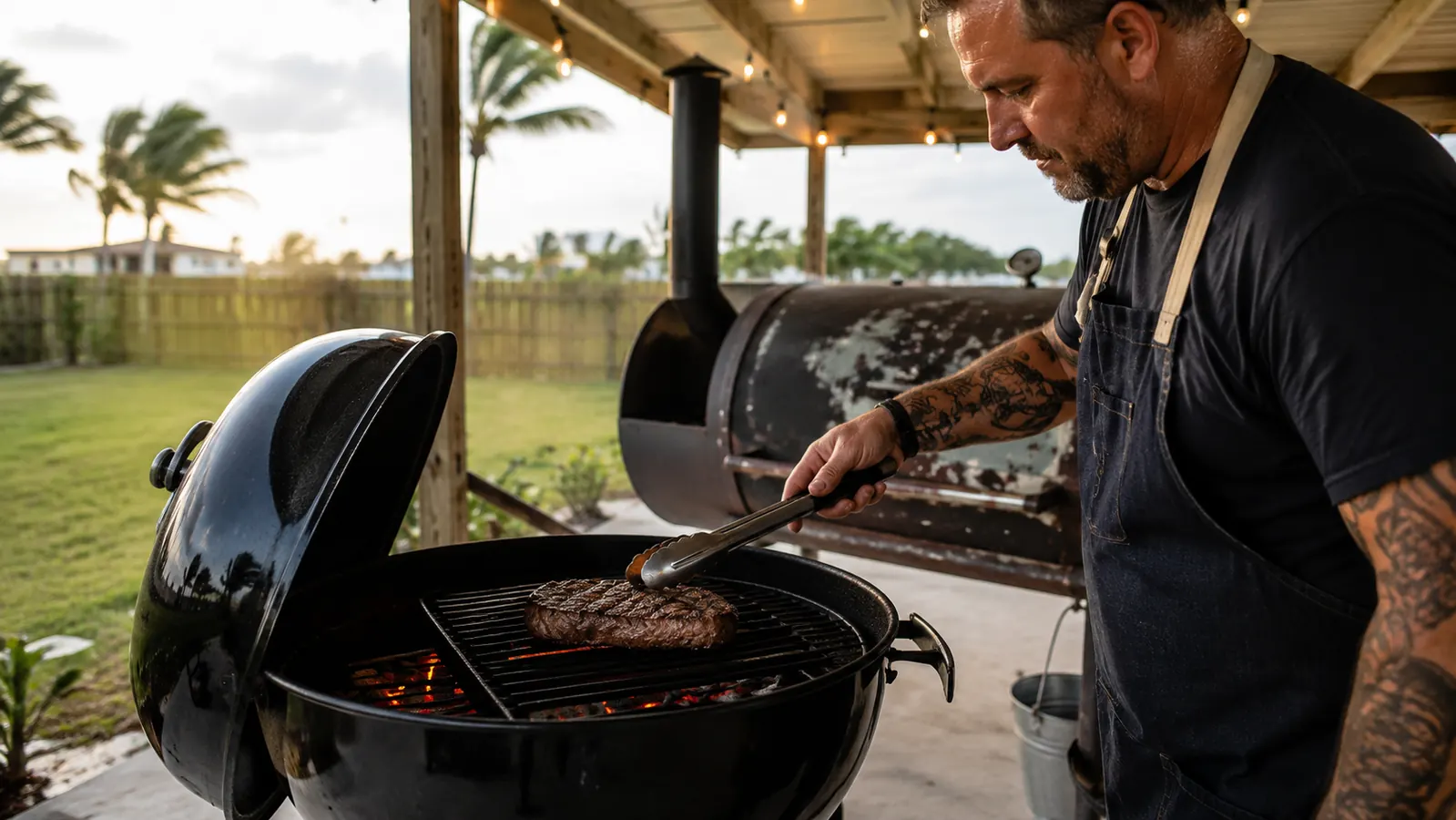
A year ago I couldn't get a decent crosshatch to show up on a ribeye no matter how hot I ran my coals. The stock wire grate on my 22.5-inch kettle just wasn't built to hold that kind of heat, so I finally bought the Weber Gourmet BBQ System sear grate, the porcelain-enameled cast iron half-moon insert that swaps in for half your stock grate. A full year of steak nights, Sunday burgers, and reverse-sear cooks later, here are ten reasons it earned a permanent spot on my kettle instead of getting shoved in a corner of the garage after one cookout.
I'll be upfront that not every reason is about performance. A couple of these are about how it changed the actual experience of cooking for Marisol and the grandkids, which matters just as much to me as the sear itself. The Weber grate isn't a magic fix, and I'll get into the maintenance tradeoff further down, but these are the reasons it's stayed bolted into my routine. Some of these reasons are about pure performance, some are about how much less I'm fighting the wind or the fire, and one or two are honestly about my grandkids.
Tired of Pale Sear Marks No Matter How Hot Your Fire Runs?
The Weber Gourmet BBQ System sear grate replaces half your stock grate with porcelain-enameled cast iron built to hold real searing heat. Check today's price and current availability on Amazon.
Amazon Check Today's Price on Amazon →It holds heat a cold steak can't steal back
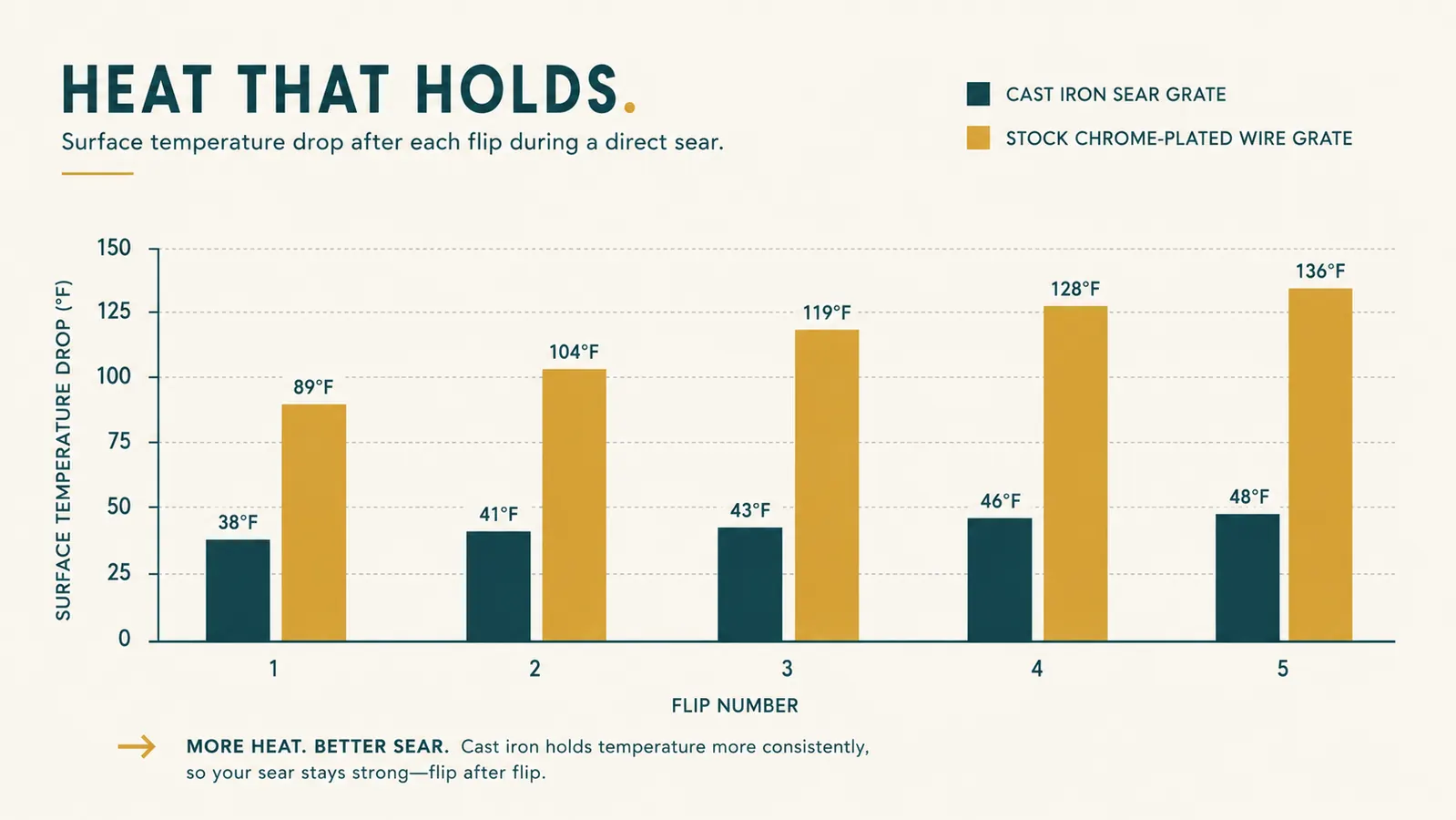
A thin wire grate loses most of its heat the instant a cold ribeye touches it, which was exactly my problem before. Cast iron carries a much bigger reserve, so the surface stays hot enough to keep browning instead of just warming the meat through. That reserve is the entire reason this grate produces a real crust instead of the gray, streaky marks I used to get.
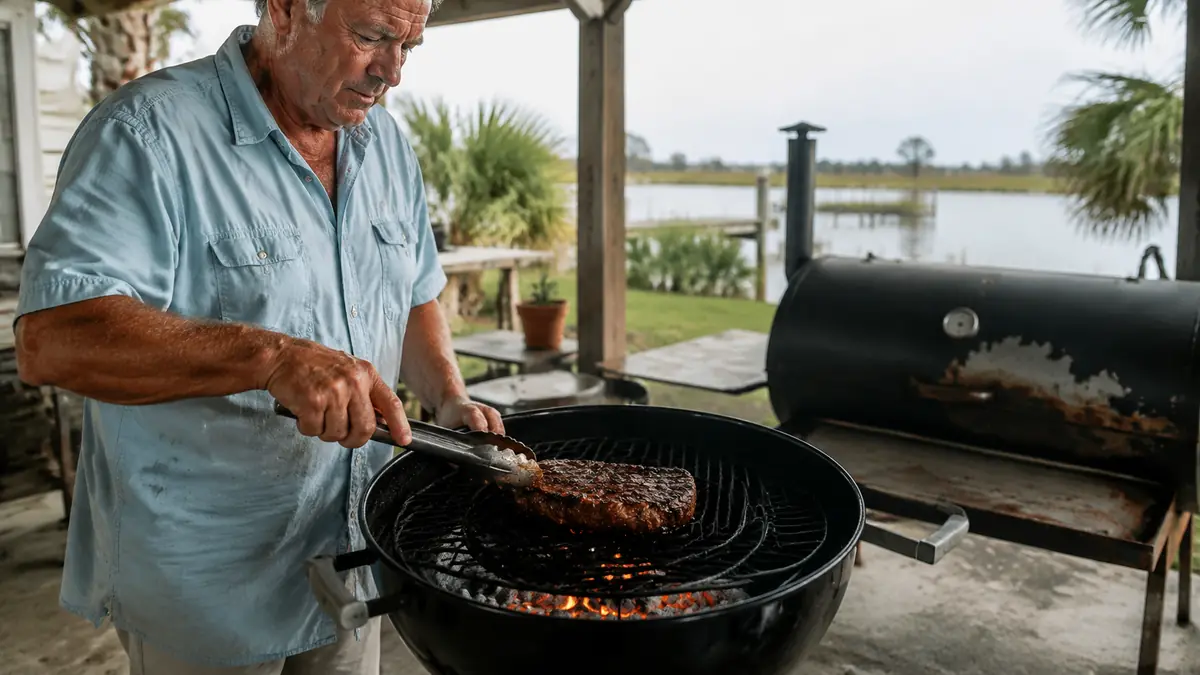
The ridges actually grip the meat
Stock wire grates barely make contact, so any crosshatch pattern comes out faint. The ridges on the Weber sear grate are taller and squarer, which means real contact pressure between iron and meat, not a light touch. That's the difference between marks you can see from across the yard and marks you have to point out to a guest.
It runs a hot zone and a cool zone on one kettle
Because it's a half-moon insert and not a full grate, the other half of my kettle stays open for the Slow 'N Sear basket or just a cooler spot to rest meat. I get a legitimate hot zone and cool zone on the same 22.5-inch cooker at the same time, which a full skillet or a full replacement grate simply can't offer. That matters most on a Sunday when I'm running a low and slow cook on one side and want a hard sear ready to go the moment the meat hits temperature, no swapping grates mid-cook.
It turns reverse sear into an actual technique instead of a guess
Low and slow on one side, then a two or three minute sear per side over the hottest coals I've got on the Weber grate. That's a real reverse sear, and it's why I bought this piece in the first place instead of just cranking the whole kettle hot and hoping the timing worked out.
It fits a Weber kettle with zero wobble
I looked briefly at cheaper generic cast iron inserts before buying this one, but fit on a 22.5-inch kettle wasn't guaranteed with those. This grate is built specifically for Weber kettles, so it sits flush every single time. After the trouble I had getting my secondhand offset smoker to seal right, I wasn't interested in gambling on a grate that might rock. A grate that rocks even slightly under a heavy ribeye is a grate that cooks unevenly, and I didn't want to find that out three cookouts in.
It handles a crowd of burgers without babysitting the whole kettle
When Kara, Beto, and the grandkids come through on a Sunday, the sear grate runs a steady stack of burgers while the rest of the kettle handles whatever else is going, pork butt or more burgers for Ruben. I'm not managing one giant hot surface for a dozen patties, just the half that actually needs to be scorching.
It's more forgiving on a windy evening
Corpus Christi doesn't hand out many calm evenings. A smaller sear surface with a short cook window is a lot easier to shield with the lid or my own body than trying to manage a fully hot kettle end to end. Steak night has gotten less stressful since I quit trying to fight the wind across the whole grate.

The porcelain coating actually resists salt air rust
Living close enough to the bay to smell it most evenings, I expected this to rust the way plenty of bare grill hardware does out here. The enamel genuinely holds up better than I expected, as long as it stays intact. A chip on one corner from a bumpy ride did expose bare iron, and I'll be honest about that tradeoff below. I wipe it down with a little oil after every single cook now, which is more upkeep than the stock grate ever asked of me, but it's kept the rust from spreading past that one corner.
It makes the kids want to watch instead of wander off
Tessa has started asking to stand next to me and watch the rotation that builds the diamond pattern, which is about as much of a cooking lesson as an eight-year-old will sit through. Ruben still wants his burger flat with no lines, but even he notices when the grate's working right. Gear that gets kids paying attention to the fire is worth something on its own.
It replaced two workarounds I was already juggling
Before this grate, I was either piling coals under one side of the stock grate or tossing a cast iron skillet on top of everything, and neither one was a real fix. The skillet works fine for a smash burger, but it eats the whole cooking surface and gives you no ridges at all. One purpose-built piece solved both problems at once.
What I'd Skip
I'd skip this if you mostly smoke low and slow and rarely run a hard direct sear, because the extra cleaning routine won't pay for itself. And I'd skip pretending the porcelain never chips. Mine did, on a car ride to Hollis's place, and it takes a real wipe-down-and-oil habit after every cook to keep a chip like that from turning into a rust ring in Gulf Coast humidity. The Weber sear grate rewards that upkeep, but it does ask for it, and I'd rather tell you that now than let the product listing sell you a maintenance-free version that doesn't exist.
The stock grate never lied to me about how hot my fire was. This is the first piece of gear that finally matched the fire I was actually building.
If you want the full year-long account, including the exact maintenance routine I use to keep the chip from spreading, I laid it out in my long-term Weber sear grate review and again, more bluntly, in the honest review focused on care and rust risk. For the step by step on actually getting the marks shown above, see my guide to steakhouse sear marks with cast iron.
Ready for Sear Marks That Actually Look Like a Steakhouse?
A year in, this is still the piece of gear that changed the most about steak and burger night at my house. Check today's price on Amazon and see if it fits your kettle.
Amazon Check Today's Price on Amazon →