
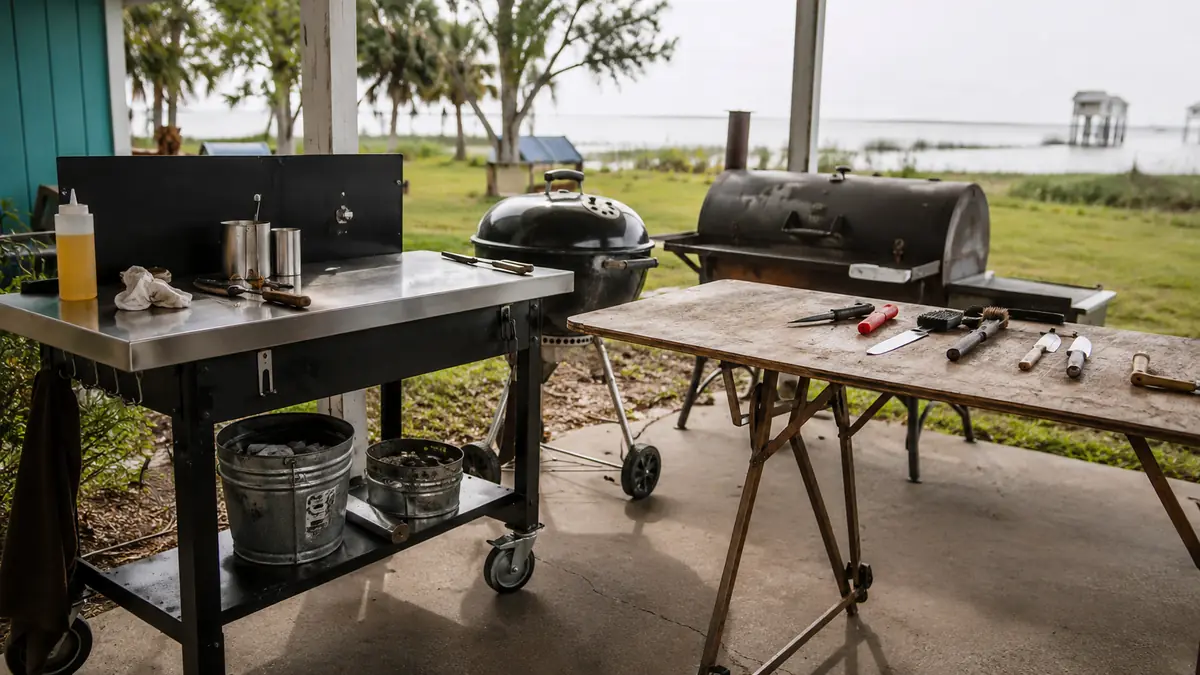
When that card table finally buckled under a rack of ribs and a full pan of glaze last year, I stood in my kitchen for about ten seconds actually weighing whether to build a replacement or just order one. I've built plenty around this house over the years, a lean-to over the kettle, a couple of raised beds out back for Marisol, so a prep table didn't scare me off on principle. What tipped me toward the Royal Gourmet PC3404S instead of a weekend in the garage is the same thing that's kept it on my patio ever since: I needed a surface I could trust with hot pans and raw meat by that coming Sunday, not three weekends later once I'd tracked down casters and a stainless sheet from three different stores.
If you've got the tools, the scrap lumber, and a free weekend already lined up, a homemade prep table can beat the Royal Gourmet cart on price and on fitting your exact patio. If you don't have all three of those lined up at once, the math tips hard toward buying something that shows up complete. I've now lived with the store-bought cart for a full year and I've also built enough outdoor furniture to know honestly what a DIY table would have cost me in time, money, and mistakes. Here's the real comparison, row by row, no thumb on the scale for either side.
I ran this comparison the way I run most decisions around here, by actually pricing out what I would have needed for a homemade version before I ever clicked buy on the Royal Gourmet cart. I sketched a frame on the back of an envelope, priced pressure-treated lumber, a stainless sheet for the top, exterior screws, and four casters rated for outdoor use. It wasn't cheap once I added it up, and that's before counting the Saturday and probably part of a Sunday it would have taken me to actually build the thing while everyone else was waiting on food.
| Royal Gourmet Cart | DIY Prep Table | |
|---|---|---|
| Cost to get started | Fixed cost for a complete cart, stainless top, frame, casters and trash holder all included | Can run close to nothing if you already own lumber, a stainless sheet, and casters, but a full parts run at the hardware store often lands close to or above the cart |
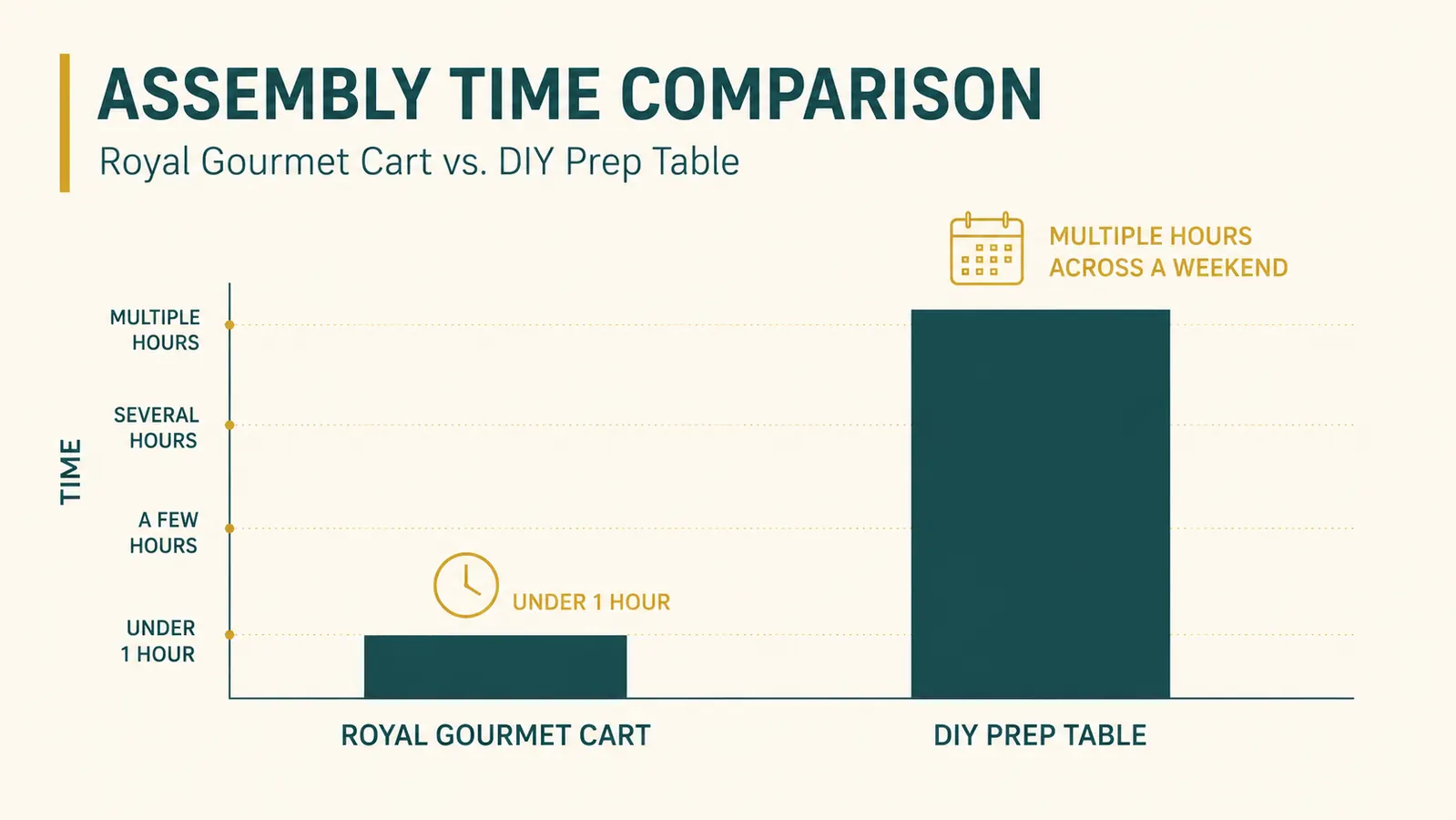
| Time to a usable surface | About 45 minutes with a screwdriver and the included wrench, ready to load the same afternoon | A half day at minimum for a simple frame, closer to a full weekend once you're cutting, priming, and mounting casters correctly |
| Tabletop material | Real 34 inch by 20 inch stainless steel, non-porous, handles pans straight off the grill without scorching | Whatever you source, often plywood with a laminate or paint finish unless you buy and mount stainless sheet yourself, which adds real cost and labor |
| Size and shape | Fixed 34 inch by 20 inch footprint, no way to change it after the fact | Built to whatever size and shape actually fits your patio, your gap between grills, or a tight side yard |
| Rolling and mobility | Four casters from the factory, two lockable, sized and mounted correctly from the start | You choose and mount your own casters, and getting the axle height and weight rating right on the first try is harder than it sounds |
| Long-term rust resistance in salt air | Powder-coated steel frame that's held its shape well, but bolt heads and caster axles showed surface rust within the first year on the Gulf Coast | Build it from cedar, teak, or PVC with stainless hardware throughout and you can make something close to rust-proof, at real added cost |
| Repairability | Replacement casters or hardware have to be sourced to match the factory spacing, which isn't always straightforward | You built it, so you know exactly how every joint and bracket goes together and can rebuild or swap any part with basic tools |
| Built-in features | Trash bag holder and a wire shelf underneath included out of the box, no extra design work | Nothing built in unless you plan and add it yourself, which means more measuring and more trips to the hardware store |
Where the Royal Gourmet Cart Wins
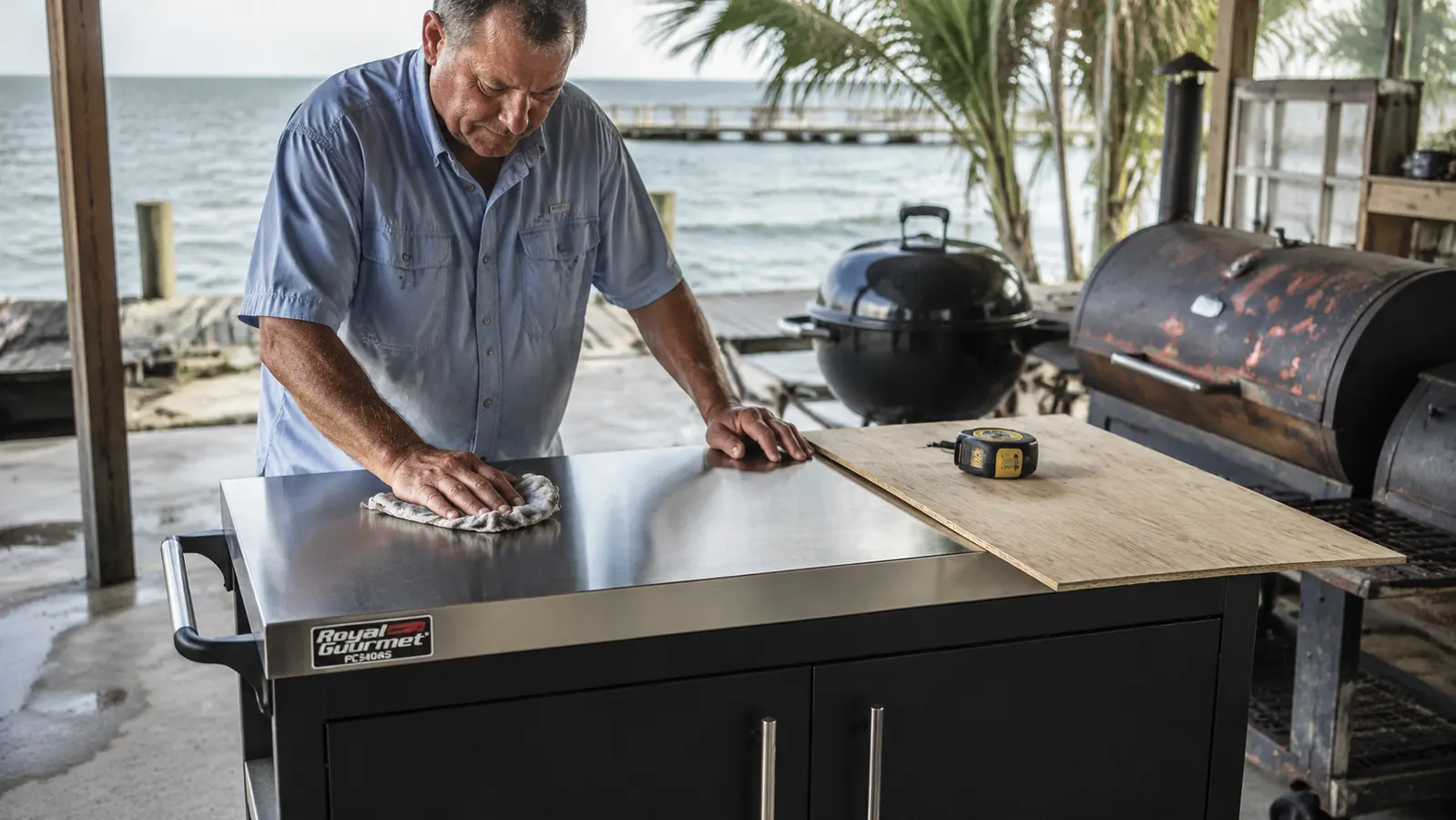
The biggest thing the Royal Gourmet cart has going for it is that somebody else already solved the design problems I would have had to solve myself. The stainless top is the right thickness and the right size for actual grilling work, not a guess I'd have made cutting my own sheet down at the hardware store. The trash bag holder on the side sounds minor until you've used one for a year, and it's the kind of small, purpose-built detail that almost never occurs to you until it's already missing from something you built yourself.
Assembly is the other place the Royal Gourmet cart wins outright. Forty five minutes with a screwdriver and a wrench, most of it spent lining up the top panel, and I had a working surface the same afternoon it arrived. Compare that to a DIY build, where even a simple frame means a trip for lumber, a trip for hardware you forgot, cutting everything square, and then still needing to source casters that roll true on concrete. I've built enough things around this house to say honestly that a first-time build rarely goes as fast as you picture it in your head.
The casters themselves are a quieter win. Mine roll smoothly on my concrete slab and two of the four lock down when I need the cart to hold still while I'm loading a brisket onto it. Getting that right on a homemade table means matching caster load ratings to your actual weight, mounting them level, and hoping you picked hardware long enough to bite into whatever you built the frame from. I've seen homemade carts around the neighborhood with casters that wobble or drag because that step got rushed, and it's an easy step to rush.
There's also the consistency factor, which doesn't get talked about enough. Every Royal Gourmet cart that ships is built to the same spec, so the reviews I read before buying actually told me something real about what I'd get. A homemade table is one of one, built by whoever's holding the drill that weekend, and the quality swings a lot more depending on how careful that person was, how sharp their saw blade was, and whether they measured twice before cutting.
Where a DIY Prep Table Wins
I'll be straight with you, if I already had a stack of treated lumber sitting in the garage and a free Saturday, a homemade table would have cost me less than the Royal Gourmet cart did. That's the honest math. A simple frame with a plywood top, or a repurposed old table with new legs, can run close to free if you're working with materials you already own, and that's a real advantage a factory-built cart just can't match on price.
Size is the other place a homemade table pulls ahead, and it's not a small thing. My gap between the kettle and the offset happens to be close to the Royal Gourmet cart's footprint, but plenty of patios aren't so accommodating. If you're working a narrow side yard or a deep corner that needs a table two feet longer or a foot narrower, you build to that exact space. Nobody's manufactured cart is going to match your patio as precisely as something you measure and cut yourself.
The rust question actually favors a DIY build too, if you build it right. My cart's bolts and caster axles picked up surface rust by month four out here near the water, which is just the tax of running steel hardware in salt air. Build your own table out of cedar or a composite decking material, with stainless steel screws and hardware from the start, and you can end up with something that shrugs off salt air a lot better than a powder-coated frame does. And if anything does eventually fail, you're the one who knows exactly how it's put together, so fixing it is a repair, not a return.
What a Weekend Build Actually Costs You
The number that surprised me most when I priced out my own build wasn't the lumber, it was the small stuff. Stainless screws instead of galvanized ones so the hardware actually holds up near the water, a decent set of outdoor-rated casters instead of the cheapest ones on the shelf, a sheet of stainless or at minimum a marine-grade sealant for a plywood top. None of it is expensive on its own, but it adds up fast, and it's the kind of thing you don't fully see coming until you're standing in the aisle with a cart full of odds and ends.
The time cost is real too, and it's the part people underestimate the most. I've built enough outdoor projects to know a first attempt rarely goes as planned. You measure wrong once, a board splits, the casters you bought turn out to need different mounting hardware than what you have. What looks like a Saturday afternoon on paper often bleeds into Sunday morning, and if you're feeding people that same weekend the way I usually am, that's a real cost even if no money changes hands for it.
Not Interested in Sourcing Casters and Stainless Sheet Yourself?
The Royal Gourmet cart arrives with the design work already done, stainless top, trash bag holder, and casters included, ready in under an hour. See today's price and current availability on Amazon.
Amazon Check Today's Price on Amazon →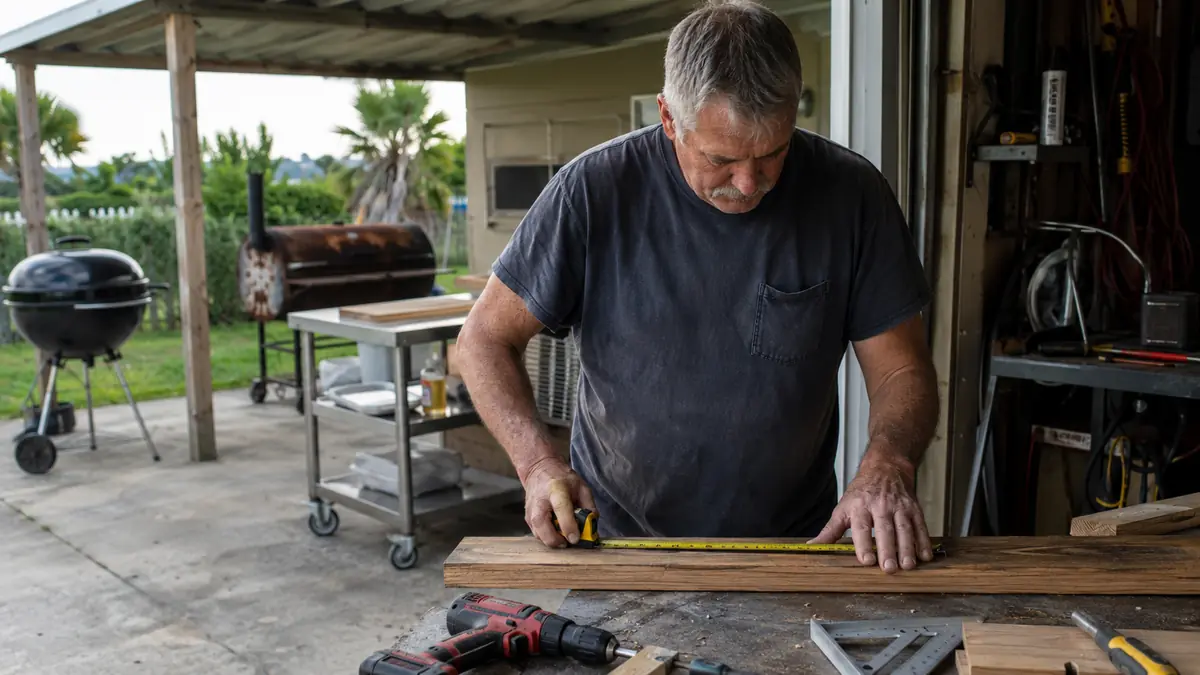
Who Should Buy Which
If you've got a specific, awkward footprint to fill, a garage full of tools you already know how to use, and you're not in a hurry, building your own prep table is a genuinely reasonable choice, and I won't tell you otherwise. You'll end up with something sized exactly right, and if you spend a little more on stainless hardware up front, it can outlast a factory frame in salt air. I laid out the actual measuring and layout steps in a separate piece on organizing a backyard grill station around a rolling cart if you want the workflow either way you go.
For most people, though, the Royal Gourmet cart is the faster, more predictable route to the same result. You get a real stainless surface, a trash holder, and casters that were sized and mounted correctly, all without a weekend of trips to the hardware store or the risk of a caster you picked wrong. I've written up a full year of using mine in a separate long-term review of the Royal Gourmet cart, including the maintenance it actually needs near the coast, and I'd also point you to my more detailed honest breakdown of assembly and the rust watch if you want the unvarnished ownership side before you decide.
My own answer, a year later, is that I don't regret skipping the build. The Royal Gourmet cart has needed some hardware maintenance I didn't expect, and I've told you about all of it, but it was rolling between my kettle and my offset the very next Sunday, holding hot pans and keeping trash bags off the ground, while a homemade version was still just a sketch on the back of an envelope in my kitchen.
Ready to Skip the Build and Get Cooking This Weekend?
A year in, the Royal Gourmet cart is still doing the job a homemade table would have taken me a weekend to match. Check today's price on Amazon and see if it's in stock.
Amazon Check Today's Price on Amazon →